
Global Food Markets: Volatility surges on geopolitics & weather
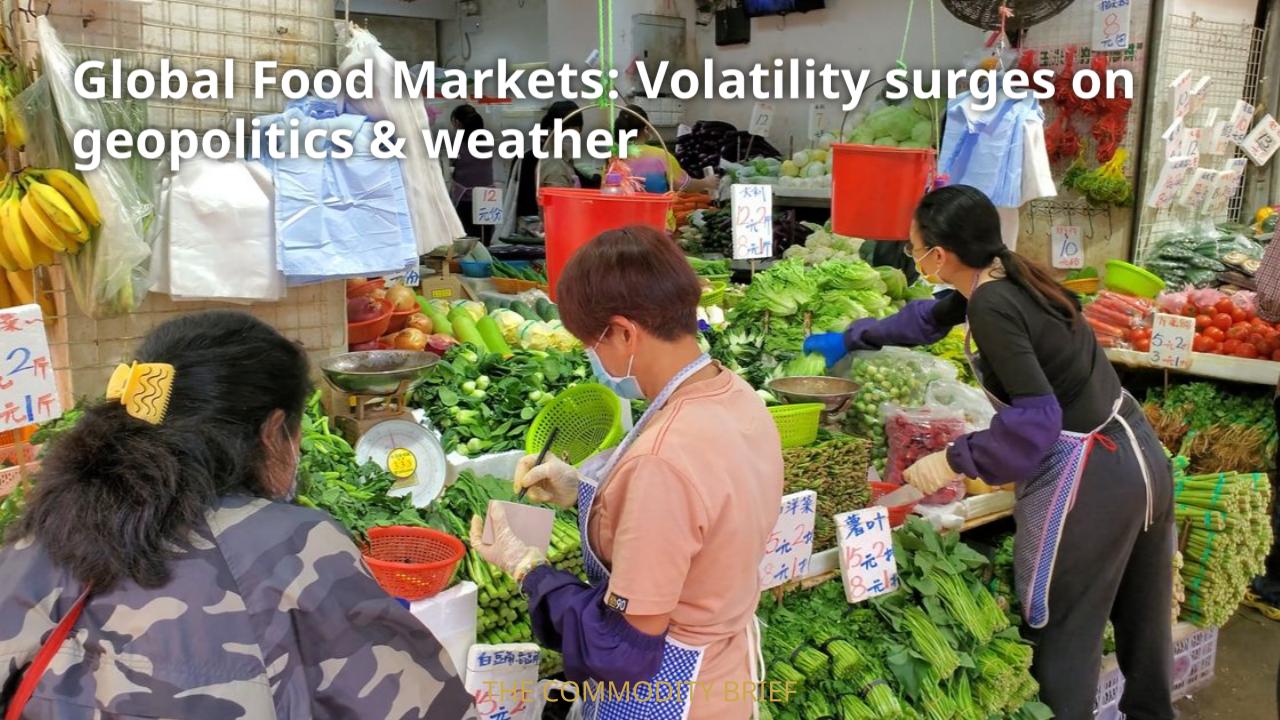
Global food markets are shifting under persistent geopolitical strains and extreme weather, and the FAO Food Outlook provides a compass for investors, farmers, traders, and consumers in a time of heightened uncertainty. A single drought, port disruption, or policy shift can ripple through futures, groceries, and government budgets. The report underscored that cereals, oils, and meat prices have become more volatile since 2022, even as demand remains stubbornly inelastic. In this edition, we unpack the signals, add context, and translate the analysis into actionable insights for a broad audience of market participants.
The FAO Food Outlook: Signals You Can Read Across Markets
The FAO Outlook synthesizes weather, trade, and policy signals to describe a tightening in global food markets. Imagine a global pantry where wheat, corn, and edible oils are staples; when drought or a port closure reduces a key shelf, prices swing across the store. The current trend blends tighter supplies with population growth and biofuel mandates, producing higher volatility than in the previous decade. Geopolitical frictions limit exports, transport costs rise, and storage challenges complicate trade flows. In short, markets are navigating a chessboard of weather, policy, and risk without a fixed equilibrium.
Beyond the script’s narrative, the Outlook also highlights how systemic shocks propagate through supply chains. The intertwining of weather extremes with policy responses—export controls, stockpiling, and tariff adjustments—creates feedback loops that can amplify or dampen price moves. For traders, this means focusing on both physical fundamentals (crop conditions, shipping routes, fertilizer inputs) and policy signals (sanctions, subsidies, and trade agreements) to gauge risk premia and payoffs across asset classes.
From Postwar Security to Global Market Integration: A Long Arc
Historical context matters. The postwar era saw governments build buffer stocks and deploy export restrictions to cushion domestic prices, a memory that still informs policy choices during crises. Over time, global trade liberalization accelerated, with a handful of crops shaping price signals across continents. The 2010s delivered more moderate volatility as harvests improved, yet climate variability and policy interventions kept sensitivity high. The FAO, along with the World Bank and IMF, emphasized resilience and broader supply-chain interdependencies through regional trade blocs. The Ukraine conflict then jolted perception, reminding investors that physical assets can move markets faster than forecasts.
Today’s market impact reflects a shift from forecasting to managing uncertainty. The Outlook notes that cereals and sugar have traded at elevated levels while oilseed markets swing on weather forecasts and export restrictions. Practically, traders monitor the Black Sea corridor, Brazilian harvest updates, and U.S. planting data as price catalysts. For consumers, this translates into higher grocery bills and tighter margins for food manufacturers. For investors, it signals the need to tempo risk premium adjustments rather than rely on a single sector’s trajectory.
Current Dynamics: Weather, Trade, and Policy in Action
Weather shocks and geopolitical frictions are no longer occasional disruptors; they are the backdrop for market behavior. The combination of tighter supplies and stronger demand—driven by population growth and biofuel mandates—has elevated volatility in cereals, oils, and proteins. When export restrictions or sanctions bite, prices often react more quickly than supply chains can fully adjust. Transport costs and storage limitations further complicate flows, adding layers of friction to price discovery.
Traders tend to focus on a few high-leverage indicators: Black Sea corridor developments, updates on Brazil’s harvests, and U.S. planting intentions. These inputs influence futures curves, cash markets, and hedging activity. On the consumer side, households feel the impact through rising grocery costs, while manufacturers contend with higher input prices that compress margins. Financial markets respond with a mix of inflation hedges and risk-off positioning, and large agricultural producers adjust cultivation plans to align with risk scenarios.
Who Is Affected—and How They Respond
The reach of agricultural volatility extends across the economy. Major grain exporters like Russia and Ukraine influence global supplies, while fertilizer markets react to swings in natural gas and potash prices. Consumer staples groups experience margin pressure when feed costs rise, and airlines and manufacturers must manage stabilized fuel and packaging inputs. Pension funds and sovereign wealth funds increasingly diversify into farmland and other real assets as inflation hedges with potential long-run value. In the field, smallholders in East Africa and other emerging markets rely on predictable weather and favorable currency conditions to service debt and invest in improved yields.
Technology and policy shape reaction curves as well. Digital platforms connect growers with buyers, potentially compressing margins through more efficient pricing, while geopolitical and macro factors set the risk appetite for capital allocation. The Ukraine conflict and ongoing sanctions remain a reference point for how risk and liquidity move through commodity markets, with currency flows and trade routes responding to policy shifts as much as to weather and harvest data.
Smart Money: Where Capital Is Moving
Smart money has begun to tilt toward assets that offer inflation hedges and real assets exposure. Sovereign wealth funds and large asset managers are diversifying into farmland, logistics, and commodity-linked bonds, seeking diversification and potential resale value in resilient markets. Some funds tilt toward fertilizer producers and grain storage operators, betting on ongoing supply tightness and price resilience. Retail investors gravitate to diversified energy- and agriculture-focused ETFs, while risk-parity funds rebalance toward higher volatility assets to capture pricing power during inflationary episodes.
Banking and insurance sectors are re-pricing risk as well. Structured notes linked to crop prices and elevated climate risk underwriting reflect a broader reallocation of capital away from vanilla exposures toward hedged or linked strategies. Across the board, the market rewards resilience—carefully priced exposure to risk rather than complacency in the face of uncertain weather and geopolitics.
Risks in Focus: Bear Cases and What Might Trigger Them
- Severe droughts in the Southern Hemisphere or breakdowns in Black Sea trade could trigger price spirals that feed into inflation and policy tightening.
- Sudden policy shifts—export bans, subsidies, or stockpile releases—risk locking in higher costs for manufacturers and eroding consumer confidence.
- Energy-price spikes amplify fertilizer costs and transport expenses, compounding input pressures for farmers and agribusinesses.
- Debt distress in emerging markets reduces import capacity and heightens currency volatility, exacerbating food-price volatility for import-dependent economies.
- Climate extremes threaten not only harvests but the infrastructure that moves goods to market, creating knock-on effects for distribution and pricing.
In this environment, investors should monitor weather models, policy signals, and supply-chain resilience to assess risk premia and positioning opportunities. The prudent stance emphasizes disciplined risk budgeting, not sensationalism, and a tilt toward strategies with pricing power and diversification benefits.
Guidance for Retail Investors: A Practical Playbook
- Diversify across commodities and related equities to avoid single-sector shocks. Pair commodity exposure with quality equities and fixed income to smooth volatility.
- Consider low-cost broad commodity ETFs or thematically focused strategies in grains and energy, while being mindful of roll yield, liquidity, and tracking error.
- Hit the brakes on overleveraged bets with disciplined stop losses and position sizing to curb drawdowns during volatility spikes.
- Rotate toward regions and assets with favorable crop cycles and currency stability to improve resilience against regional shocks.
- Build a lean watchlist including major producers, critical infrastructure plays (storage, logistics), and fertilizer-related assets.
- Learn seasonal patterns tied to harvests and planting cycles to align decisions with supply dynamics rather than headlines.
Outlook: Constructive Yet Cautious
The FAO outlook remains cautiously constructive on inventories and resilience, but risks shadow the baseline. If El Niño or La Niña intensifies or returns with unusual strength, price volatility could rise further across cereals, oils, and proteins. Supply-chain resilience, farmer adaptation, and smarter logistics will shape the next leg of the cycle. Policymakers may test markets with targeted interventions to prevent panic, while ongoing data monitoring will keep risk management sharp. The overarching message is clear: diversification, quality producers, and sectors with pricing power will fare better in inflationary periods.
Conclusion: Key Takeaways
- Volatility remains the norm as weather, geopolitics, and policy interact to reshape global food prices.
- Watered-down certainty means investors must blend fundamentals with policy and logistics insights to assess risk premia.
- Diversification is essential—across asset classes, geographies, and supply-chain themes such as storage, fertilizer, and transport.
- Focus on resilience—invest in producers, infrastructure, and instruments that can weather shocks and maintain pricing power.
- Stay disciplined with risk budgeting, clear watchlists, and awareness of seasonal patterns tied to harvests and planting cycles.
If you found this valuable, subscribe to The Commodity Brief for weekly insights on alternative assets and commodities.


