
Commodities Tool: Faster, Transparent Trading Across Markets
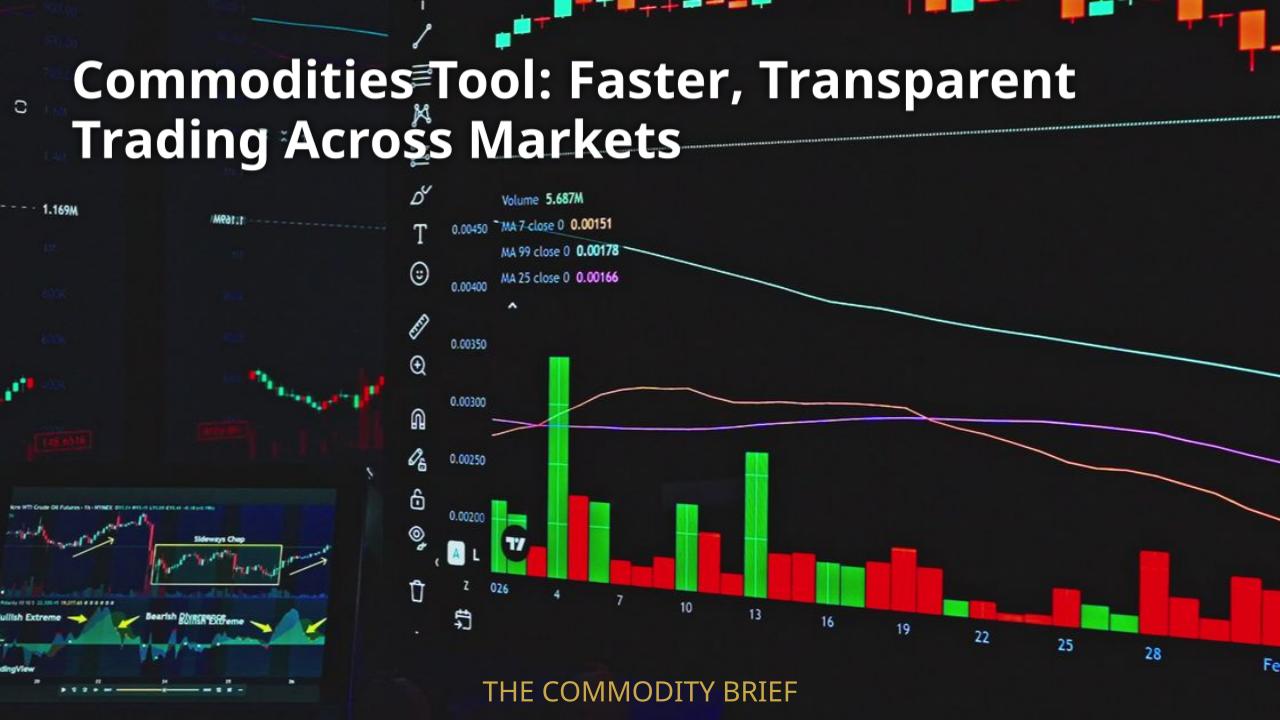
Pillar Financials has unveiled a bold $20 million raise to advance a new software toolbox designed to track and trade raw materials across continents. In a market hungry for transparency amid volatile metals, energy, and agricultural prices, the financing signals ambition—and the risk that comes with ambitious technology plays. Traders, hedge funds, and traditional banks will watch how quickly Pillar can translate funding into measurable improvements in data quality, latency, and decision speed.
What Pillar Is Building
At its core, Pillar is creating a comprehensive analytics and trading platform that aggregates pricing data, warehouse inventories, shipment routes, and risk metrics into a single, user-friendly interface. The funding round accelerates development, enables the hiring of data engineers, and unlocks licenses for data feeds from exchanges and logistics networks. Think of it as a weather app for commodities: predict risk, simulate hedges, and act before the storm hits.
Key capabilities include:
- Pricing data aggregation across oils, metals, grains, and other commodity baskets.
- Warehouse and inventory visibility to gauge supply pressures and delivery timing.
- Shipment-route analytics and routing optimization to reduce transport risks and costs.
- Integrated risk metrics and real-time correlation monitoring across asset classes.
- Trade simulations and cross-counterparty comparisons for informed decision-making.
- Single-pane control for hedging decisions, pricing discovery, and liquidity management.
In practice, traders can test strategies, compare data sources, and gauge how cross-asset moves align or diverge, all within a cloud-based environment. The objective is to reduce guesswork and tighten timing in markets where a few minutes can determine profitability.
Market Context: Why Now
The push comes as supply shocks, sanctions, and climate policy reshape incentives around sourcing, hedging, and liquidity. Data quality and speed have become competitive differentiators, with regulators warning about accuracy and transparency as markets become more automated. The evolution mirrors broader shifts in financial technology: the era of offline workflows and phone-based trading has given way to dashboards, cloud computing, and algorithmic strategies that require reliable data feeds and uptime.
As currencies, macro policy, and geopolitical frictions continue to influence commodity prices, a platform like Pillar could compress cycle times and facilitate cross-asset hedges. The role of data quality, latency, and interoperability is underscored by ongoing debates about price discovery, market access, and the resilience of supply chains in a volatile environment.
Potential Market Impact
- Data and logistics providers could see higher capacity utilization as platforms license more feeds and routes, creating a larger, more interconnected ecosystem.
- Large producers and traders may gain faster hedging and clearer price signals, enabling more precise risk management across geographies.
- Financial intermediaries (data vendors, banks, and fintech platforms) might monetize scale and uptime through turnkey analytics offerings.
- Retail and institutional investors could access new analytics, but onboarding costs and data charges may temper the pace of adoption.
- Small brokers and regional players could feel pressure to modernize or risk losing relevance if the platform becomes the industry baseline.
Beyond trading desks, Pillar’s tool could influence supply-chain visibility, helping carriers, warehouses, and shippers optimize routing and reduce stockouts through better demand signaling and risk assessment.
Risks and Challenges
- Data quality and latency remain core risks. If feeds are unreliable or late, the platform may generate misleading signals rather than actionable insights.
- Concentration risk exists around a handful of data partners and cloud providers, potentially creating single points of failure.
- Regulatory considerations around data privacy, pricing transparency, and antitrust concerns could complicate partnerships and licensing models.
- Model risk and overfitting—signals that performed in recent volatility may fade in different regimes, leading to false confidence.
- Integration hurdles with legacy systems and internal risk controls could slow adoption or increase total cost of ownership.
- Budget discipline and ongoing operating costs may challenge firms if the platform does not deliver clear time-to-value.
Proof Points to Watch
- Latency reductions in price discovery and order execution compared with existing data feeds.
- Adoption metrics such as pilot conversions, active user counts, and cross-asset hedging volumes.
- Licensing prices for data and the breadth of data sources integrated into the platform.
- Interoperability with other risk management tools and ERP-like systems used by commodity desks.
- Regulatory clarity and governance around data feeds, pricing, and platform security.
Who Benefits—and Who Bears the Risk
- Beneficiaries: Large energy producers, miners, and agricultural traders seeking faster hedges and clearer signals; data providers and cloud vendors expanding reach; fintech platforms monetizing scalable analytics; and investors gaining access to deeper risk insights.
- Risks for others: Retail and institutional investors may face onboarding hurdles and higher data costs; small banks and regional brokers could struggle to compete with integrated dashboards; legacy traders may resist shifting away from familiar workflows.
Macro and Regulatory Backdrop
The macro picture—sanctions, tariff battles, and shipping bottlenecks—tightens global supply lines and elevates hedging demands. Energy prices swing with geopolitical risk, while industrial demand remains uneven as economies recover. Central banks’ inflation and liquidity debates influence software and data vendor funding, and a stronger U.S. dollar can mute localized commodity moves, complicating cross-border trades. In this environment, transparent, scalable risk analytics are increasingly valued, even as regulators stress data quality and market integrity.
What This Means for Investors and Traders
- For traders, Pillar promises faster, data-driven hedging decisions, potentially reducing time-to-decision and improving risk-adjusted returns—assuming data quality and uptime hold up.
- For data and cloud providers, the platform could unlock higher licensing and usage fees if adoption scales broadly across geographies and commodities.
- For retail participants, careful education and cautious exposure are essential, as the technology shifts the decision curve from gut instinct to measurable signals.
Conclusion: Key Takeaways
- Ambition meets risk: Pillar’s $20 million raise aims to reshape commodity decision-making by merging data, logistics, and analytics into one interface.
- Speed and visibility are the catalysts—the platform’s success hinges on data quality, latency, and seamless interoperability with existing systems.
- Wider markets watch adoption closely—early pilots could influence data licensing, price discovery, and cross-asset hedging dynamics, potentially altering liquidity and competition.
- Constructive caution is prudent—regulatory, execution, and concentration risks require disciplined risk management and a measured approach to scaling.
If you found this analysis valuable, subscribe to The Commodity Brief for weekly insights on alternative assets and commodity market dynamics. Stay informed as Pillar and similar platforms push the boundaries of data-driven trading in a volatile global marketplace.


